
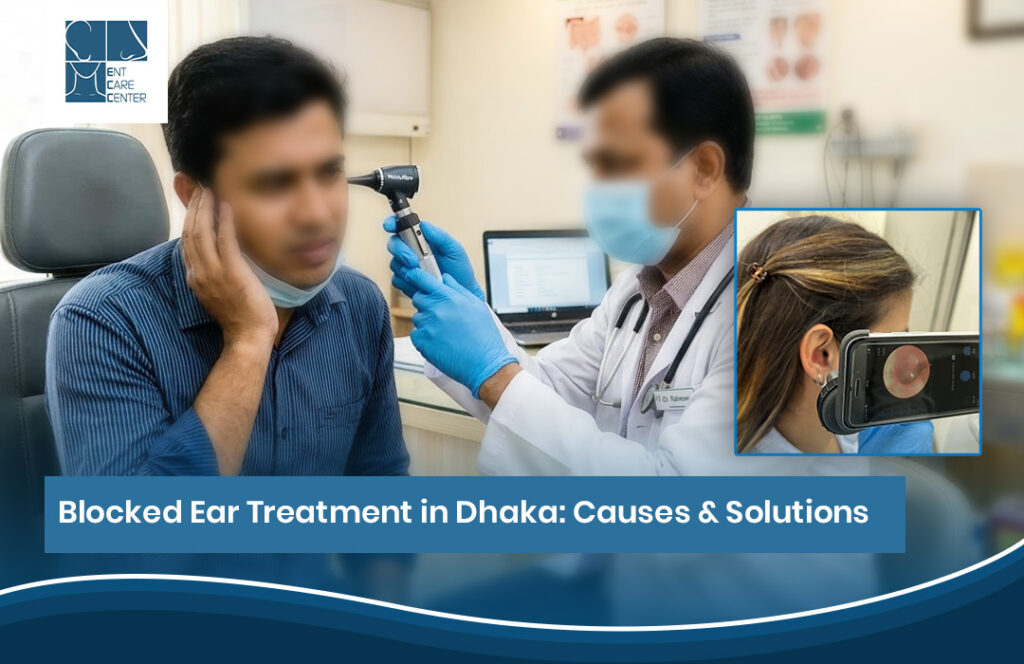
A blocked ear, often described as a feeling of fullness, muffled hearing, or pressure in the ear, is a common issue that can range from mildly annoying to significantly disruptive. At ENT Care Center in Dhaka (located in Gulshan-2, SANMAR TOWER-2), specialized ENT doctors offer expert diagnosis and effective treatments for blocked ears, including safe ear wax removal using modern techniques like micro suction. This comprehensive guide covers the causes, symptoms, diagnosis, treatments, and prevention of blocked ears to help you understand and address this problem.
What Is a Blocked Ear and Why Does It Happen?
A blocked ear occurs when something prevents normal sound transmission or pressure equalization in the ear canal or middle ear. The ear has three main parts: outer, middle, and inner. Blockages most commonly affect the outer ear canal or the Eustachian tube (which connects the middle ear to the back of the nose and throat). This tube normally opens to equalize air pressure and drain fluid. When it fails or the canal is obstructed, you experience that “plugged” sensation, similar to being underwater or during altitude changes.
Common Causes of Blocked Ears You Should Know
Several factors can lead to a blocked ear:
- Ear wax (cerumen) build-up — The most frequent cause; wax hardens and blocks the canal.
- Eustachian tube dysfunction (ETD) — Often due to colds, allergies, sinus infections, or flu causing swelling and mucus blockage.
- Fluid in the middle ear — From infections (otitis media) or after upper respiratory issues.
- Sudden pressure changes — Such as during flights, diving, or elevator rides (barotrauma).
- Allergies or chronic sinusitis — Leading to persistent nasal congestion affecting the Eustachian tube.
- Foreign objects — More common in children.
- Other factors — Rarely, tumors, growths, or structural issues.
Identifying the root cause is essential for proper treatment.
Symptoms That Indicate You Have a Blocked Ear
Common signs include:
- Muffled or reduced hearing in one or both ears.
- A feeling of fullness or pressure.
- Ear pain or discomfort.
- Ringing or buzzing (tinnitus).
- Dizziness or balance issues.
- Itchiness, popping sounds, or crackling when swallowing/yawning.
- In severe cases, discharge, fever, or significant hearing loss.
If symptoms persist or worsen, professional evaluation is recommended.
When Should You See an ENT Specialist for a Blocked Ear?
Seek care from an ENT specialist in Dhaka if:
- The blockage lasts more than a few days.
- You experience pain, significant hearing loss, dizziness, or fever.
- Home remedies fail to provide relief.
- Symptoms recur frequently.
- There’s discharge, ringing, or sudden onset after injury/pressure change.
Early consultation prevents complications like infections or permanent hearing issues.
How Doctors Diagnose the Cause of a Blocked Ear
ENT specialists use a step-by-step approach:
- Medical history review and symptom discussion.
- Otoscopy — Examining the ear canal and eardrum with a lighted instrument.
- Tympanometry — Testing middle ear pressure and eardrum movement.
- Audiometry — Hearing tests to assess loss type and degree.
- Additional tools — Nasal endoscopy for Eustachian tube issues, or imaging if needed.
At centers like ENT Care Center, advanced diagnostics ensure precise identification of the cause.
Effective Blocked Ear Treatment Options in Dhaka
Treatments vary by cause and are tailored to the patient:
- Ear wax removal — Safe micro suction or irrigation by specialists (avoid DIY methods that risk damage).
- Medications — Decongestants, nasal sprays, antihistamines for allergies/ETD, or antibiotics for infections.
- Autoinsufflation techniques — Like the Valsalva or Toynbee maneuver to open the Eustachian tube.
- Procedures — Myringotomy with grommet insertion for persistent fluid.
- Lifestyle and supportive care — For pressure-related or allergy-triggered cases.
Modern options in Dhaka emphasize minimally invasive, effective methods with quick recovery.
Ear Wax Build-Up: A Major Cause of Ear Blockage
Ear wax protects the ear by trapping dust and preventing infections, but excessive or impacted wax causes blockage. Symptoms include gradual hearing loss, fullness, and sometimes tinnitus or pain. In Dhaka, ENT specialists at places like ENT Care Center perform safe, effective removal using micro suction — a gentle vacuum technique under direct vision, far superior to cotton buds (which push wax deeper and risk perforation).
Home Remedies to Relieve Mild Ear Blockage
For temporary, mild cases (e.g., from colds or pressure changes):
- Yawn, swallow, or chew gum to activate the Eustachian tube.
- Perform gentle Valsalva maneuver: Pinch nose, close mouth, and gently blow.
- Use warm compresses or steam inhalation.
- Over-the-counter decongestants or nasal saline sprays.
- Stay hydrated and avoid irritants like smoke.
Never insert objects into the ear or use ear candles — these can cause injury.
Risks of Ignoring a Blocked Ear Problem
Untreated blockages can lead to:
- Recurrent or chronic ear infections.
- Permanent hearing loss.
- Spread of infection to nearby structures.
- Balance disorders or vertigo.
- Complications like eardrum perforation or cholesteatoma.
Prompt treatment avoids these risks and restores normal function.
Tips to Prevent Ear Blockage and Maintain Ear Health
- Avoid cotton swabs deep in the ear — let wax migrate out naturally.
- Manage allergies and sinus issues promptly.
- Use earplugs during flights or diving; practice pressure-equalizing techniques.
- Keep ears dry after swimming/showers.
- Treat colds/sinus infections early.
- Protect hearing from loud noises.
- Schedule regular check-ups if prone to wax build-up or ETD.
Blocked ears are often simple to resolve with the right care. If you’re in Dhaka and dealing with persistent blockage, muffled hearing, or discomfort, consult an experienced ENT specialist at ENT Care Center (Gulshan-2) for advanced diagnosis and treatment, including safe micro suction ear cleaning. Don’t ignore the issue — expert help can provide fast, lasting relief. Contact them today for an appointment!