
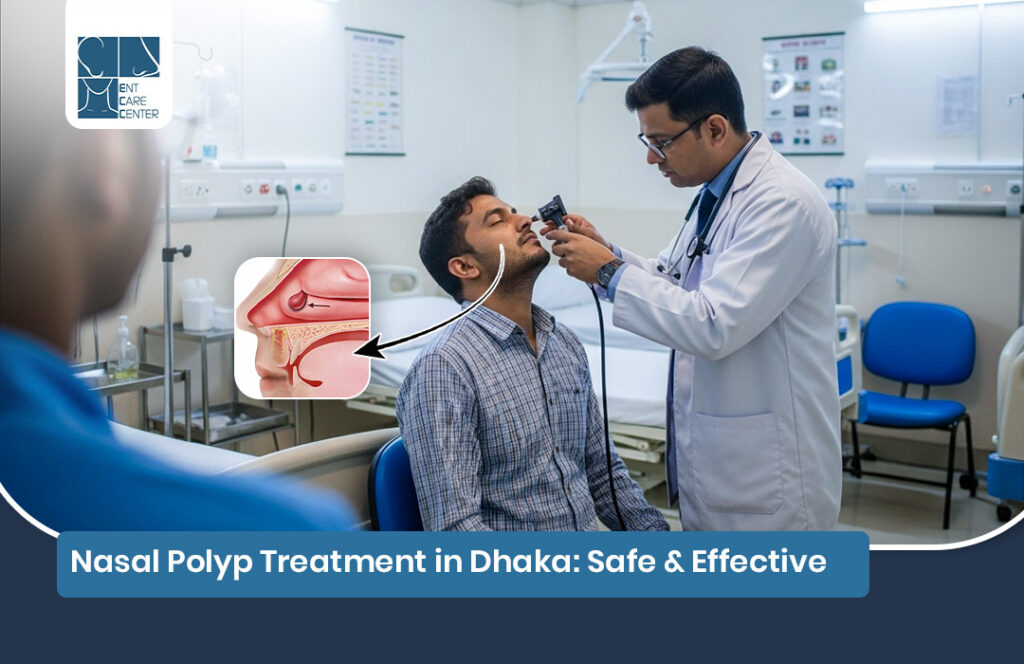
Nasal polyps are soft, non-cancerous growths that develop on the lining of the nasal passages or sinuses, often causing discomfort and breathing difficulties. At ENT Care Center Bangladesh in Dhaka, we offer safe, effective, and advanced treatments tailored to each patient’s needs. From accurate diagnosis to minimally invasive procedures, our expert ENT specialists ensure optimal outcomes with minimal downtime. If you’re struggling with nasal congestion or related symptoms, understanding nasal polyps is the first step toward relief.
What Are Nasal Polyps? Symptoms to Watch For
Nasal polyps are teardrop-shaped or grape-like growths that form due to chronic inflammation in the mucous membranes. They are typically painless but can grow large enough to obstruct airflow. Common symptoms include:
- Persistent nasal congestion or stuffiness
- Runny nose or postnasal drip
- Reduced sense of smell or taste
- Facial pain or pressure, especially around the sinuses
- Snoring or sleep disturbances
- Frequent sinus infections
- Headaches
If left untreated, polyps can lead to complications like obstructive sleep apneaery or chronic sinusitis. Early recognition of these symptoms allows for timely intervention at our Dhaka facility.
Common Causes of Nasal Polyps
Nasal polyps often stem from prolonged inflammation triggered by various factors. Key causes include:
- Chronic rhinosinusitis (CRS): The most common trigger, where ongoing sinus inflammation leads to polyp formation.
- Allergies: Conditions like allergic rhinitis from dust, pollen, or pollution (prevalent in Dhaka’s urban environment) irritate nasal linings.
- Asthma: Up to 40% of people with asthma develop polyps due to shared inflammatory pathways.
- Aspirin sensitivity: Part of Samter’s triad (asthma, aspirin intolerance, nasal polyps).
- Infections: Recurrent bacterial, viral, or fungal sinus infections.
- Genetic factors: Conditions like cystic fibrosis increase risk.
Environmental pollutants in Dhaka, such as vehicle emissions and dust, exacerbate these causes, making specialized care essential.
How Doctors Diagnose Nasal Polyps
Diagnosis at ENT Care Center Bangladesh begins with a thorough evaluation. Our specialists use:
- Nasal endoscopy: A thin, flexible tube with a camera inserted into the nostrils for direct visualization of polyps.
- CT scans: To assess polyp size, location, and sinus involvement.
- Allergy testing: Skin prick or blood tests to identify triggers.
- Biopsy: Rarely, to rule out malignancy (polyps are almost always benign).
This multi-step approach ensures precise diagnosis, distinguishing polyps from other conditions like tumors or deviated septum.
Medical Treatments for Nasal Polyps
Many patients achieve relief without surgery through conservative management:
- Corticosteroid nasal sprays (e.g., fluticasone or budesonide): Reduce inflammation and shrink small polyps.
- Oral or injectable steroids: For short-term control of larger polyps.
- Biologic therapies: Drugs like dupilumab target specific inflammation pathways in severe cases.
- Antihistamines and decongestants: Manage allergy-related symptoms.
- Saline irrigation: Daily nasal rinses to clear mucus and allergens.
Treatment is personalized, with regular follow-ups to monitor progress and adjust as needed.
Surgical Options: Safe Polyp Removal in Dhaka
When medical therapy fails or polyps cause significant obstruction, surgery is highly effective. At our center, we specialize in:
- Endoscopic sinus surgery (FESS): Minimally invasive, using an endoscope to remove polyps and open sinus drainage paths. Performed under general anesthesia, it preserves healthy tissue.
- Polypectomy: Direct removal of polyps via nasal endoscopy.
These procedures boast success rates over 90%, with low complication risks. Our state-of-the-art facility in Dhaka uses advanced tools for precision and safety.
Recovery Tips After Nasal Polyp Surgery
Post-surgery recovery is typically swift, with most patients resuming normal activities in 1-2 weeks:
- Use prescribed saline sprays to keep nasal passages moist.
- Avoid blowing your nose forcefully for the first week.
- Take pain relievers and antibiotics as directed.
- Attend follow-up appointments for debridement (gentle cleaning of surgical sites).
- Elevate your head while sleeping to reduce swelling.
- Stay hydrated and avoid irritants like smoke or strong odors.
Full symptom relief may take 4-6 weeks as sinuses heal.
Preventing Nasal Polyps from Coming Back
Recurrence is possible (up to 50% in chronic cases), but prevention strategies include:
- Consistent use of maintenance nasal steroids.
- Managing underlying conditions like allergies or asthma with medications.
- Annual ENT check-ups for early detection.
- Avoiding known triggers through environmental controls.
Long-term biologic therapy may be recommended for high-risk patients.
Lifestyle Changes to Support Nasal Health
Simple habits can enhance treatment outcomes:
- Humidify your home: Use a humidifier to combat Dhaka’s dry air.
- Adopt a healthy diet: Anti-inflammatory foods like omega-3-rich fish, fruits, and vegetables.
- Exercise regularly: Improves overall immunity and reduces inflammation.
- Quit smoking: Tobacco worsens nasal irritation.
- Practice good hygiene: Handwashing to prevent infections.
These changes complement medical care for sustained nasal health.
When to Seek Expert ENT Care
Consult an ENT specialist if symptoms persist despite over-the-counter treatments, or if you experience:
- Severe facial pain or vision changes
- Bleeding from the nose
- Worsening smell loss
- Recurrent infections
Early intervention at ENT Care Center Bangladesh prevents complications and improves quality of life.
Patient Success Stories: Polyp Treatment in Dhaka
Rahim, 45: “Chronic congestion ruined my sleep for years. After endoscopic surgery at ENT Care Center, I breathe freely again—no more nightly struggles!”
Ayesha, 32: “Allergies led to polyps, but nasal sprays and FESS transformed my life. The team’s care was exceptional.”
Thousands of Dhaka residents have regained comfort through our expert treatments. Contact us today to schedule a consultation.