
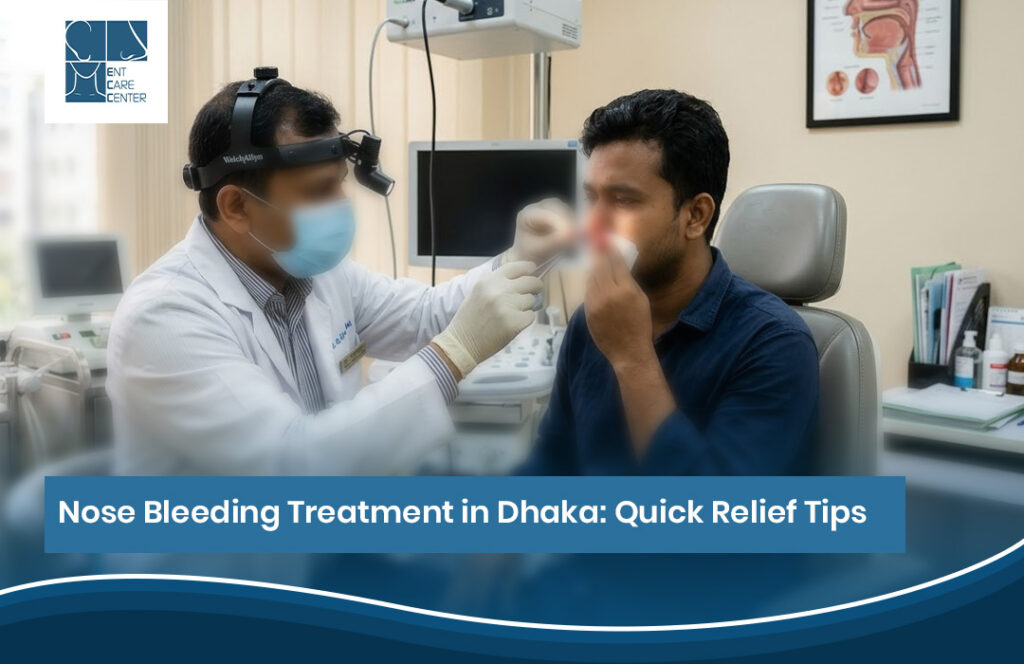
Nose bleeding, medically termed epistaxis, is a frequent occurrence where blood flows from the nasal passages due to ruptured blood vessels in the delicate nasal lining. While most nosebleeds are minor and stop quickly, recurrent or heavy bleeding can signal underlying issues requiring expert care. In Dhaka, specialized ENT clinics like ENT Care Center (located in SANMAR TOWER-2, Gulshan-2) offer prompt diagnosis and treatment for nosebleeds, including cauterization, nasal packing, and endoscopic evaluation by experienced specialists. This informative guide covers causes, types, symptoms, when to seek help, quick relief steps, treatments, home remedies, triggers, risks, and prevention strategies.
What Causes Nose Bleeding? Common Reasons You Should Know
Nosebleeds happen when fragile blood vessels in the nasal mucosa break. Common causes include:
- Dry air — Especially in winter, air-conditioned rooms, or low-humidity environments, drying out and cracking the nasal lining.
- Nose picking or forceful blowing — Trauma irritates or damages vessels.
- Upper respiratory infections — Colds, sinusitis, or allergies cause inflammation and fragility.
- Allergies — Leading to frequent sneezing, rubbing, or congestion.
- Medications — Blood thinners (e.g., aspirin, warfarin), nasal sprays (overuse), or decongestants.
- Trauma — Injury to the nose or face.
- Environmental irritants — Smoke, pollution, chemicals, or dry heat.
- Other factors — High blood pressure, clotting disorders, or rarely, tumors/vascular issues.
Most cases stem from the front of the nose (Kiesselbach’s plexus), an area rich in superficial vessels.
Types of Nosebleeds: Front vs. Back Nosebleeds
- Anterior (front) nosebleeds — Most common (about 90%), originate from the front nasal septum. Usually mild, easy to control, often from dry air or trauma.
- Posterior (back) nosebleeds — Less common but more serious; blood flows down the throat, harder to stop, often linked to high blood pressure, clotting issues, or deeper vessel damage. May require medical intervention.
Symptoms That Indicate You Need Medical Attention
Typical signs are bright red blood from one or both nostrils, a metallic taste, or blood draining to the throat. Seek immediate help if:
- Bleeding lasts >20 minutes despite pressure.
- Heavy flow or large blood loss.
- Difficulty breathing, swallowing blood causing vomiting.
- Accompanied by dizziness, weakness, pale skin, or rapid heartbeat (signs of significant blood loss).
- Recurrent episodes or in children/elderly.
- Associated with headache, facial pain, or vision changes.
When to See a Nose Bleeding Specialist in Dhaka
Visit an ENT specialist if nosebleeds:
- Happen frequently (more than once a week).
- Are heavy or hard to stop.
- Occur after injury or with blood-thinning medications.
- Accompany other symptoms like persistent congestion or facial swelling.
In Dhaka, centers like ENT Care Center provide specialized care, including nasal endoscopy to identify sources and advanced treatments.
Step-by-Step Guide to Stop a Nosebleed Quickly
Follow these first-aid steps for most anterior nosebleeds:
- Sit upright and lean slightly forward to prevent swallowing blood.
- Pinch the soft part of your nose (just below the bony bridge) firmly with thumb and index finger for 10–15 minutes without releasing.
- Breathe through your mouth.
- Apply a cold compress or ice pack wrapped in cloth to the nose bridge or back of neck.
- After stopping, avoid blowing, picking, or heavy lifting for several hours.
- If bleeding restarts, repeat or seek medical help.
Do not tilt your head back — this can cause blood to flow down the throat.
Effective Medical Treatments for Frequent Nosebleeds
For persistent or severe cases in Dhaka:
- Cauterization — Chemical (silver nitrate) or electrocautery to seal bleeding vessels, often done in-clinic.
- Nasal packing — Absorbent materials or inflatable balloons to apply pressure.
- Topical treatments — Antibiotic ointments or moisturizing gels.
- Endoscopic evaluation — To locate and treat posterior bleeds.
- Addressing underlying causes — Managing hypertension, adjusting medications, or treating allergies/sinus issues.
- Advanced options — Rarely, embolization or surgery for uncontrollable cases.
Specialists at ENT Care Center use modern techniques for safe, effective relief.
Home Remedies to Manage Mild Nosebleeds Safely
For occasional mild bleeds:
- Use saline nasal sprays or drops to keep passages moist.
- Apply petroleum jelly (Vaseline) or water-based nasal gel inside nostrils with a cotton swab.
- Use a humidifier to add moisture to indoor air.
- Stay hydrated and avoid irritants like smoke.
Avoid aspirin/ibuprofen during active bleeding if possible.
Lifestyle and Environmental Factors That Trigger Nosebleeds
Triggers include:
- Low humidity or dry seasons.
- Excessive nose blowing/rubbing.
- Exposure to dust, pollution, or allergens.
- High altitudes or air travel.
- Hot/spicy foods or alcohol (dilates vessels).
- Poorly controlled hypertension or allergies.
Identifying and minimizing these reduces frequency.
Risks of Ignoring Frequent or Severe Nosebleeds
Untreated recurrent nosebleeds can lead to:
- Anemia from chronic blood loss.
- Infection or scarring in nasal passages.
- Aspiration of blood causing respiratory issues.
- Masking serious conditions (e.g., tumors, clotting disorders).
- In posterior cases, significant hemorrhage requiring hospitalization.
Prompt evaluation prevents complications.
Tips to Prevent Nosebleeds and Maintain Nasal Health
- Keep nasal passages moist with saline sprays or gels.
- Use a humidifier in dry environments.
- Avoid nose picking and forceful blowing.
- Treat allergies, colds, or sinus issues early.
- Manage blood pressure and review medications with your doctor.
- Protect nose during sports or dusty activities.
- Stay hydrated and avoid excessive irritants.
Nosebleeds are usually manageable, but frequent ones warrant expert attention. If you’re in Dhaka experiencing recurrent or concerning nosebleeds, consult a nose bleeding specialist at ENT Care Center (Gulshan-2) for thorough assessment, quick relief, and preventive strategies. Their experienced ENT team ensures safe, effective care. Contact them today to book an appointment and regain comfort!