
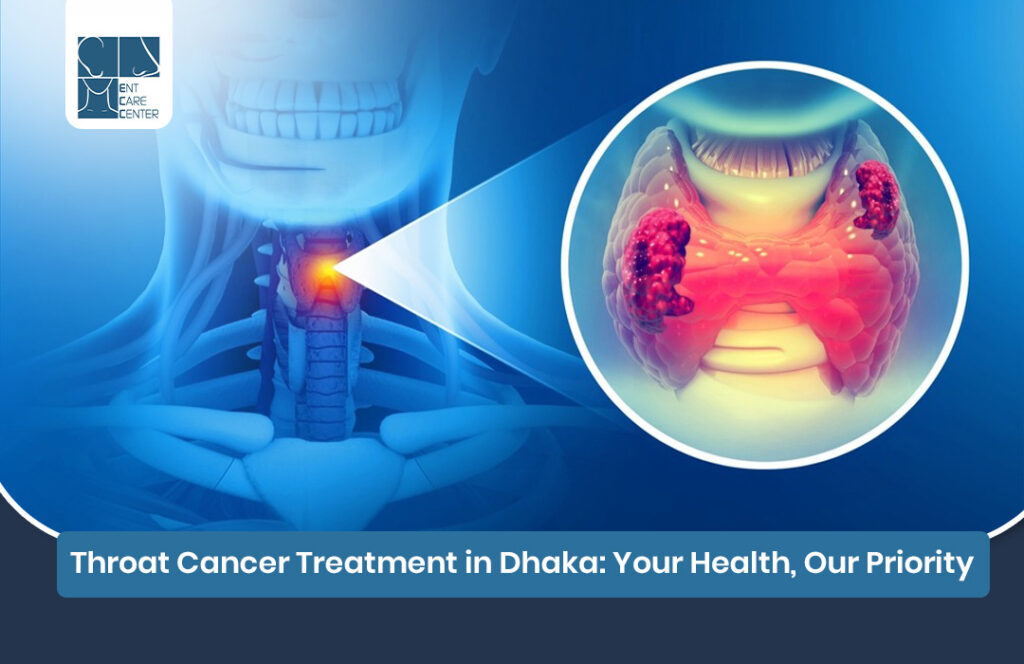
At ENT Care Center Bangladesh in Dhaka, we prioritize your health with expert, compassionate care for throat cancer. Our team of experienced ENT specialists uses advanced diagnostics and treatments to guide patients from diagnosis through recovery. Throat cancer, which affects the pharynx, larynx, or tonsils, is treatable when detected early. This comprehensive guide covers essential information to empower you on your journey.
Understanding Throat Cancer: Symptoms & Early Signs
Throat cancer develops when malignant cells form in the tissues of the throat. Common types include squamous cell carcinoma (most prevalent) and adenocarcinoma.
Early symptoms often mimic minor issues but persist:
- Persistent sore throat or cough
- Hoarseness or voice changes lasting over two weeks
- Difficulty swallowing (dysphagia)
- Ear pain (referred otalgia)
- Unexplained weight loss
- Lump or swelling in the neck
- Blood in saliva or phlegm
Early detection improves outcomes significantly. If you notice these signs, especially with risk factors, consult an ENT specialist promptly at our Dhaka center for evaluation.
Common Causes & Risk Factors of Throat Cancer
While exact causes vary, key risk factors include:
- Tobacco use: Smoking or chewing tobacco is the leading cause, damaging throat tissues via carcinogens.
- Excessive alcohol consumption: Increases risk, especially when combined with smoking.
- Human Papillomavirus (HPV): HPV-16 strain, transmitted sexually, links to rising oropharyngeal cancers.
- Poor diet: Low intake of fruits and vegetables heightens susceptibility.
- Environmental exposures: Asbestos, wood dust, or air pollution in urban Dhaka.
- Age and gender: More common in men over 50.
- Genetic factors: Family history or conditions like Plummer-Vinson syndrome.
Avoiding tobacco and alcohol, getting HPV vaccinated, and maintaining a balanced diet can reduce risks.
How Throat Cancer is Diagnosed
Accurate diagnosis starts with a thorough ENT examination at our Dhaka facility:
- Physical exam and history: Assessing symptoms and risks.
- Endoscopy: Flexible scope with camera to visualize throat tissues.
- Biopsy: Tissue sample analysis for cancer confirmation.
- Imaging: CT, MRI, PET scans to determine stage and spread.
- Additional tests: Barium swallow or panendoscopy under anesthesia.
Staging (I-IV) guides treatment; early stages (I-II) often yield better prognoses.
Treatment Options: Surgery, Radiation & Chemotherapy
Treatment is multidisciplinary and tailored to stage, location, and health:
- Surgery: Removes tumors; options include transoral laser microsurgery for early cases or laryngectomy for advanced.
- Radiation Therapy: High-energy beams target cancer cells, often post-surgery or as primary treatment. Intensity-modulated radiation therapy (IMRT) minimizes side effects.
- Chemotherapy: Drugs like cisplatin kill cancer cells, combined with radiation for locally advanced cases.
- Targeted Therapy/Immunotherapy: Drugs like cetuximab or pembrolizumab for specific mutations or to boost immunity.
Our Dhaka team coordinates oncology care for optimal results.
Minimally Invasive Procedures for Throat Cancer
We specialize in advanced, less invasive techniques:
- Transoral Robotic Surgery (TORS): Robotic arms remove tumors via mouth, preserving speech and swallowing.
- Transoral Laser Microsurgery (TLM): Precise laser excision for early tumors.
- Endoscopic Approaches: Avoid external incisions, reducing recovery time.
These preserve function and improve quality of life compared to traditional open surgery.
Recovery and Rehabilitation After Treatment
Recovery varies by treatment:
- Post-surgery: Hospital stay 3-7 days; manage pain, swelling, and temporary feeding tubes.
- Radiation/Chemo: Fatigue, dry mouth, or skin changes; sessions span 6-7 weeks.
- Rehabilitation: Speech therapy for voice restoration; swallowing therapy with therapists.
- Follow-up: Regular endoscopies and scans to monitor progress.
Most patients resume normal activities within weeks to months with support.
Nutrition Tips for Throat Cancer Patients
Treatment affects eating; focus on:
- High-calorie, high-protein foods: Soft options like smoothies, soups, yogurts.
- Hydration: Sip water frequently; avoid irritants like caffeine.
- Small, frequent meals: Use nutritional supplements if needed.
- Avoid: Spicy, acidic, or rough foods.
- Consult our dietitians for personalized plans, including tube feeding if necessary.
Good nutrition supports healing and energy.
Preventing Recurrence: What You Can Do
Reduce recurrence risk by:
- Quitting smoking and alcohol completely.
- Attending all follow-up appointments.
- HPV vaccination for eligible individuals.
- Healthy lifestyle: Balanced diet, exercise, weight management.
- Monitoring symptoms and reporting changes promptly.
Survival rates exceed 90% for early detection with adherence.
The Role of ENT Specialists in Throat Cancer Care
ENT specialists lead throat cancer management:
- Expert diagnosis via advanced endoscopy.
- Surgical precision for tumor removal and reconstruction.
- Coordination with oncologists, radiologists, and therapists.
- Long-term monitoring and supportive care.
At ENT Care Center Bangladesh, our specialists deliver holistic, patient-centered treatment.
Real Patient Stories: Overcoming Throat Cancer
Rahim, 58, Dhaka: A smoker with hoarseness, diagnosed early via endoscopy. TORS and radiation preserved his voice; now cancer-free after 3 years, he advocates quitting smoking.
Ayesha, 45: HPV-related cancer treated with chemo-radiation. Speech therapy helped her return to teaching; she credits early intervention.
These stories highlight hope and the impact of expert care at our center.
Throat cancer is challenging but beatable with timely action. At ENT Care Center Bangladesh, we’re committed to your priority—your health. Contact us today for consultation.