
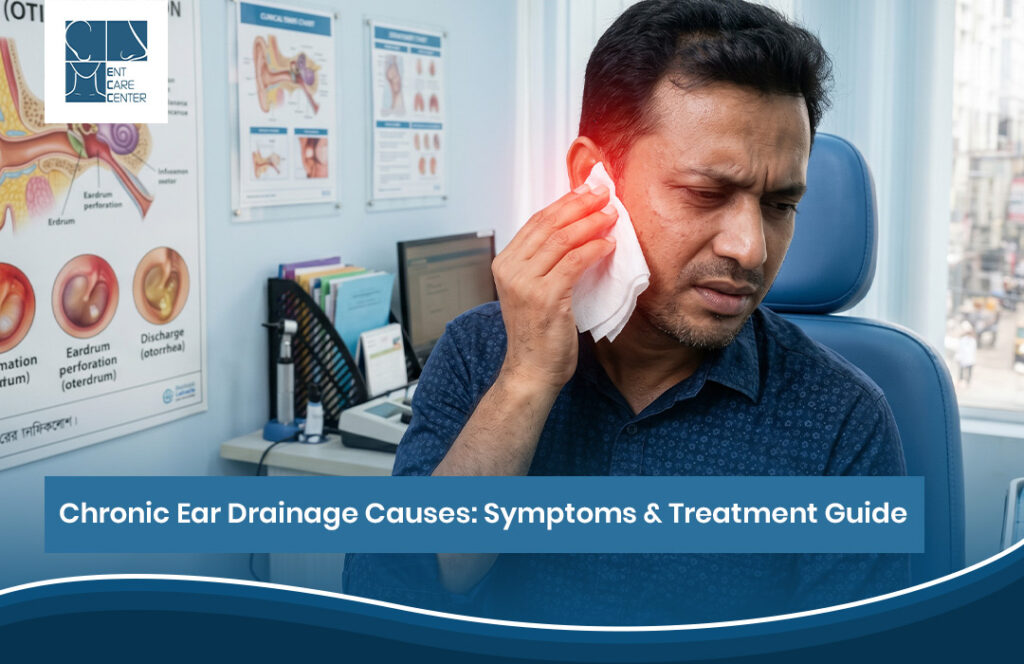
Chronic ear drainage, also known as chronic otorrhea, refers to persistent discharge from the ear lasting more than 6–8 weeks. It is not a disease itself but a symptom of an underlying problem, often involving infection, inflammation, or structural issues in the ear. In Dhaka, many patients visit ENT specialists for this condition due to high rates of untreated ear infections, pollution, and humidity. Timely diagnosis and treatment are essential to prevent complications like hearing loss or spread of infection.
What is Chronic Ear Drainage?
Chronic ear drainage is the long-term leakage of fluid, pus, or blood from the ear canal. It may be continuous or intermittent and is often accompanied by hearing difficulty or discomfort. Unlike acute ear infections that resolve quickly, chronic drainage indicates ongoing inflammation or damage to the middle ear, eardrum, or mastoid bone. Without proper care, it can lead to permanent ear damage.
Common Causes of Ear Discharge
Several factors can trigger chronic ear drainage:
- Repeated or untreated middle ear infections
- Perforated (hole in) eardrum
- Cholesteatoma (abnormal skin growth in the middle ear)
- Chronic sinusitis or allergies leading to Eustachian tube dysfunction
- Foreign objects in the ear (common in children)
- Skin conditions like eczema in the ear canal
- Trauma or previous ear surgery complications
- Rarely, tumors or tuberculosis
In humid climates like Bangladesh, moisture and recurrent colds significantly increase risk.
Symptoms to Watch For
Look out for these warning signs:
- Persistent ear discharge (yellow, green, bloody, or foul-smelling)
- Hearing loss or muffled hearing
- Ear pain or itching
- Ringing in the ear (tinnitus)
- Dizziness or balance problems
- Swelling around the ear
- Fever (in active infection)
- Headache or facial weakness (in advanced cases)
Foul-smelling discharge often points to serious infection or cholesteatoma.
Infection-Related Ear Drainage
Most cases of chronic ear drainage are linked to bacterial or fungal infections. Common bacteria include Pseudomonas aeruginosa and Staphylococcus aureus. Infection-related drainage often follows acute otitis media that fails to heal completely. In children, frequent upper respiratory infections and swimming in unclean water can keep the cycle going. Fungal infections (otomycosis) are also common in Dhaka during monsoon season due to moisture.
Chronic Otitis Media Overview
Chronic Otitis Media (COM) is the leading cause of persistent ear discharge. It is divided into:
- Chronic Suppurative Otitis Media (CSOM): With eardrum perforation and ongoing discharge.
- Inactive COM: Dry perforation without active infection.
Long-standing CSOM can destroy the tiny bones in the middle ear, leading to conductive hearing loss. In severe cases, it may spread to the mastoid bone (mastoiditis) or even affect the brain.
When to See an ENT Specialist
Consult an ENT doctor immediately if:
- Discharge continues for more than 2–3 weeks
- You notice blood or foul smell
- Hearing is decreasing
- Pain, fever, or dizziness develops
- Discharge returns after previous treatment
Early specialist care prevents complications and the need for surgery.
Diagnosis Methods in Clinics
ENT clinics in Dhaka use these reliable methods:
- Detailed history and ear examination with otoscope or microscope
- Ear swab culture & sensitivity test (to identify bacteria/fungi)
- Pure Tone Audiometry (hearing test)
- Tympanometry
- CT scan of the temporal bone (for cholesteatoma or bone erosion)
- Sometimes MRI if intracranial complications are suspected
Modern ENT centers provide same-day diagnosis and clear explanation of findings.
Medical Treatment Options
Treatment depends on the cause:
- Antibiotics: Oral or ear drops (culture-guided)
- Antifungal drops: For fungal infections
- Steroid ear drops: To reduce inflammation
- Ear cleaning (aural toilet): Done by ENT specialists to remove debris
- Surgery: Tympanoplasty (eardrum repair), mastoidectomy, or cholesteatoma removal when medical treatment fails
Many patients achieve good results with consistent medical therapy and proper follow-up.
Home Care Do’s and Don’ts
Do’s:
- Keep the ear dry — use a cotton ball with petroleum jelly while bathing
- Take prescribed medications on time
- Follow up regularly with your doctor
- Maintain good nasal hygiene
Don’ts:
- Never insert cotton buds, fingers, or any object into the ear
- Avoid swimming until fully healed
- Do not stop medication early even if discharge decreases
- Avoid water entering the ear
Prevention of Recurring Ear Infection
- Treat colds, sinusitis, and allergies promptly
- Avoid forceful nose blowing
- Vaccinate children against pneumonia, measles, and flu
- Breastfeed infants (boosts immunity)
- Maintain ear hygiene without over-cleaning
- Control diabetes and avoid smoking
- Seek early treatment for any ear pain or discharge
Conclusion
Chronic ear drainage is highly treatable when addressed properly. Ignoring it can lead to serious complications including permanent hearing loss. If you or your child is experiencing ongoing ear discharge, visit a reputed ENT clinic in Dhaka such as ENT Care Center for expert evaluation and advanced care. Early intervention ensures better outcomes and helps restore healthy ears and normal hearing. Don’t wait — book an appointment today for accurate diagnosis and effective treatment.